What to put on a medical ID tag
By Kishan & Jinal, PrintPluto · Ottawa, Canada
A medical ID tag has one job: help a stranger, a teacher or a paramedic understand what's going on when the person wearing it can't explain. The best tags say the most important thing at a glance and make the rest easy to find.
This guide is general information, not medical advice. Ask your doctor or pharmacist what's most important for you or your child to share.
The essentials
- The condition, in plain words: Asthma, Type 1 diabetes, Severe peanut allergy, Epilepsy.
- What to do, if it's simple: "Uses an inhaler", "Has an EpiPen in backpack", "Check blood sugar".
- An emergency contact who will answer the phone, plus a backup.
- Key medications and allergies to medications, especially anything a hospital must avoid.
An engraved tag only has room for a few words, so people end up choosing between the condition and the contact number. An NFC medical tag shows the condition on the front and opens a full profile when tapped: medications, allergies, doctor, contacts and notes, with a button to call your emergency contact.
Condition by condition
- Asthma: where the reliever inhaler is kept, triggers, and whether there's an action plan.
- Diabetes: type, insulin or other medications, signs of a low, and what helps (for example juice or glucose tablets).
- Severe allergy: the allergen, reaction, and where the epinephrine auto-injector is.
- Epilepsy: seizure type, what a typical seizure looks like, how long before calling 911, and rescue medication.
- Dementia: name, that the person may be confused or lost, a caregiver to call, and calming tips.
- Autism and nonverbal: how the person communicates, what helps or overwhelms them, and who to call.
Keeping it private
Share what helps in an emergency and nothing more. You don't need a home address or health card number on a tag. With our medical tags, you write the profile yourself after it arrives and lock it with a PIN, so you can update a medication or phone number in a minute without buying a new tag.
Where to wear it
Keychains work well on a backpack zipper, school bag, purse or set of keys, where people are likely to notice it. Put it somewhere visible and easy to reach.
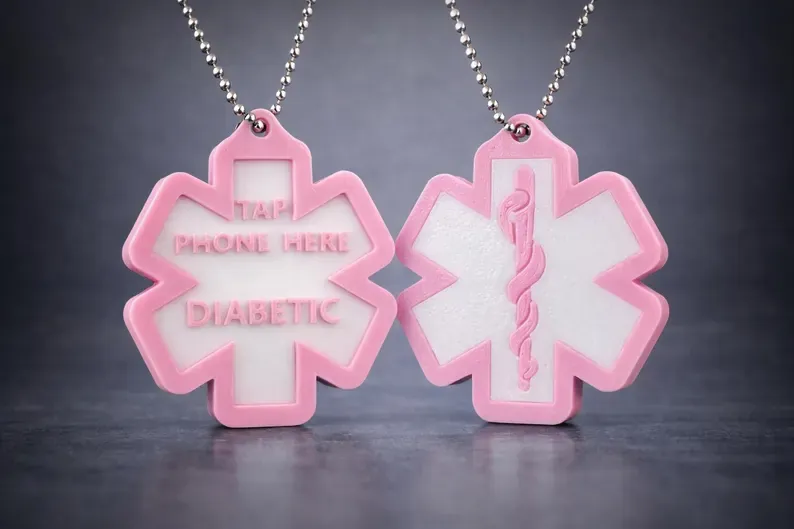 Medical NFC TagTap to see a person's condition, medications and emergency contacts. Profile locked with your own PIN.See the medical NFC tag